

If you’ve been keeping an eye on your FYP lately, you’ll know the "glued down" look is officially taking a backseat. While we all love a seamless melt, the conversation in 2026 has shifted toward long-term hair health and protective styling that actually protects.
For anyone dealing with thinning edges or hair loss, the traditional "glue-and-spray" method can feel like a gamble. That’s why we’re seeing a huge rise in searches for "high-fidelity glueless wigs" and "traction alopecia solutions." At The Wig Bar London, we’re bridging the gap between clinical scalp health and high-end aesthetic.
1. Protecting the "Biological Budget"
In Trichology, there's a lot of talk about the scalp's "biological budget." When you’re constantly using heavy adhesives, you’re essentially "spending" your hairline’s health for a temporary look.
The move toward glueless realism isn't just a trend; it’s a necessity for anyone wanting to maintain their edges. A well-constructed glueless unit allows your scalp to breathe and makes your nightly scalp-care routine actually possible.
2. The Tech Behind the "Melt"
One of the biggest myths we’re debunking this year is that you need glue for a natural look. With advancements in HD lace and custom-fit elastic bands, a glueless unit can now sit flatter and more securely than ever before.
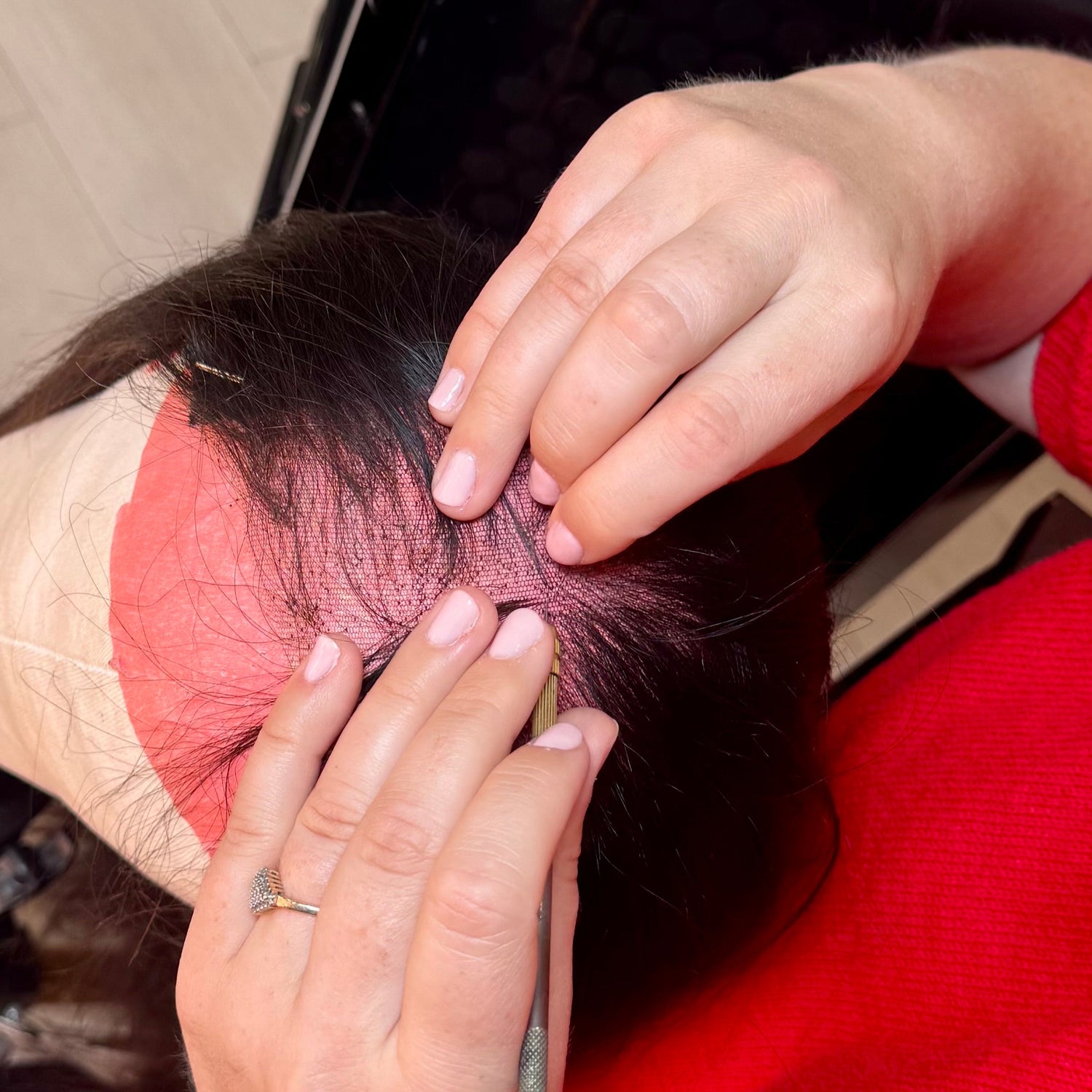
We’re focusing on bespoke ventilation, where the hair is knotted into the lace to mimic your exact natural density. It’s the "Quiet Luxury" version of a wig; it doesn't shout, it just looks like it’s growing from your scalp.
3. Transitioning with Intention
If you’re currently using wigs to navigate hair thinning, the goal should always be to ensure the unit isn't making the problem worse. By choosing a glueless, breathable option, you’re giving your natural hair the best environment to recover while still feeling like your most confident self.

